Engineering Team Update: Transmission, Distribution, and Water Treatment System Conceptual Designs
The engineering team of AE2S, Black and Veatch (BV), and KLJ continues to make great progress on the conceptual designs for water transmission and distribution, as well as a water treatment system.
Conceptual Transmission Design
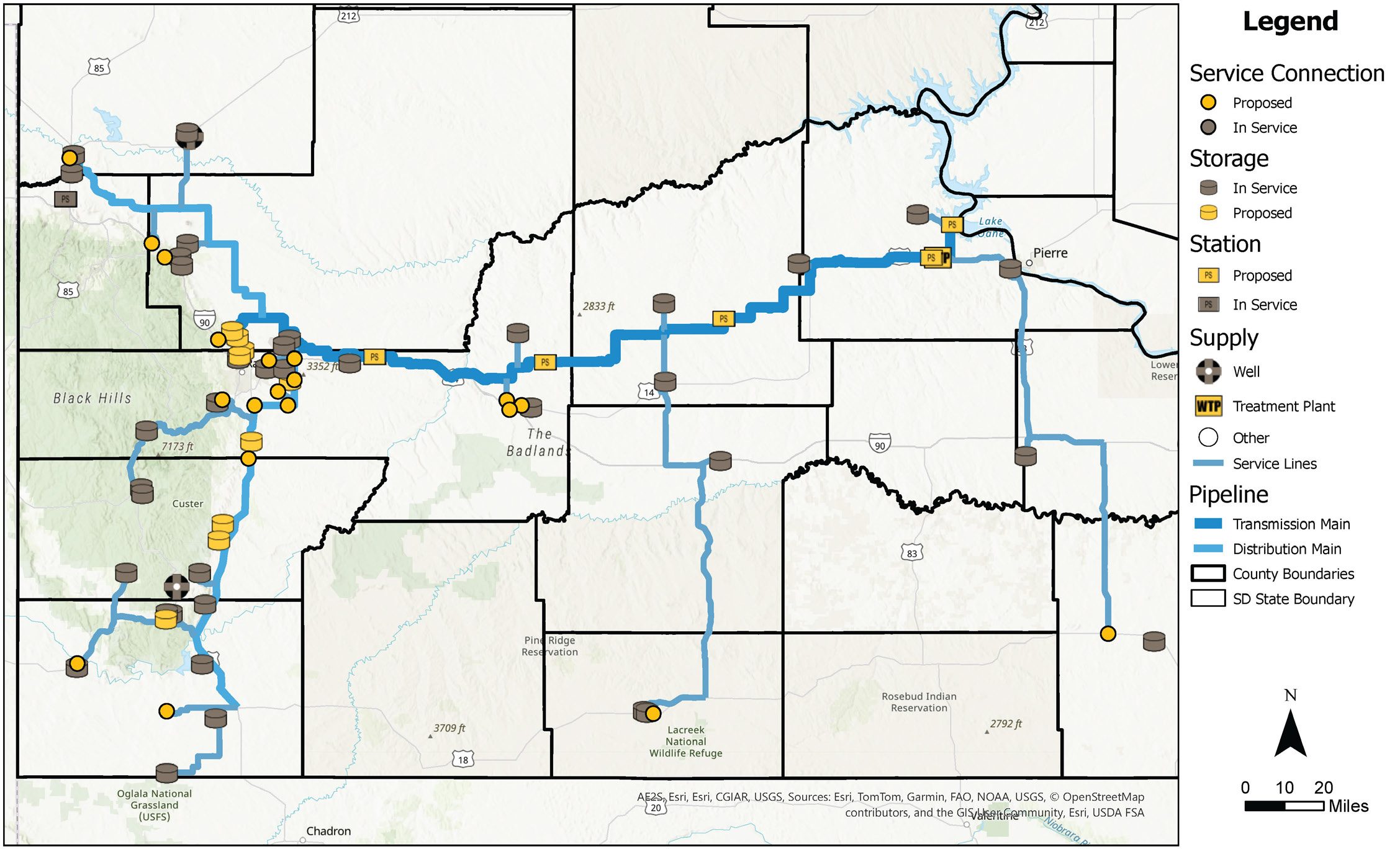
The conceptual design for a system that would provide peak day demands is now complete. It consists of a 165-mile long 72-inch diameter pipeline from Lake Oahe to the Rapid City Metro Area. In addition, four pump stations are included in the concept to move the water the length of the pipeline and lift the water nearly 2,000-foot elevation difference between the lake and Rapid City area. Each pump station will also include storage reservoirs to provide operational and equalization storage.
Aquifer Storage & Recovery Concept
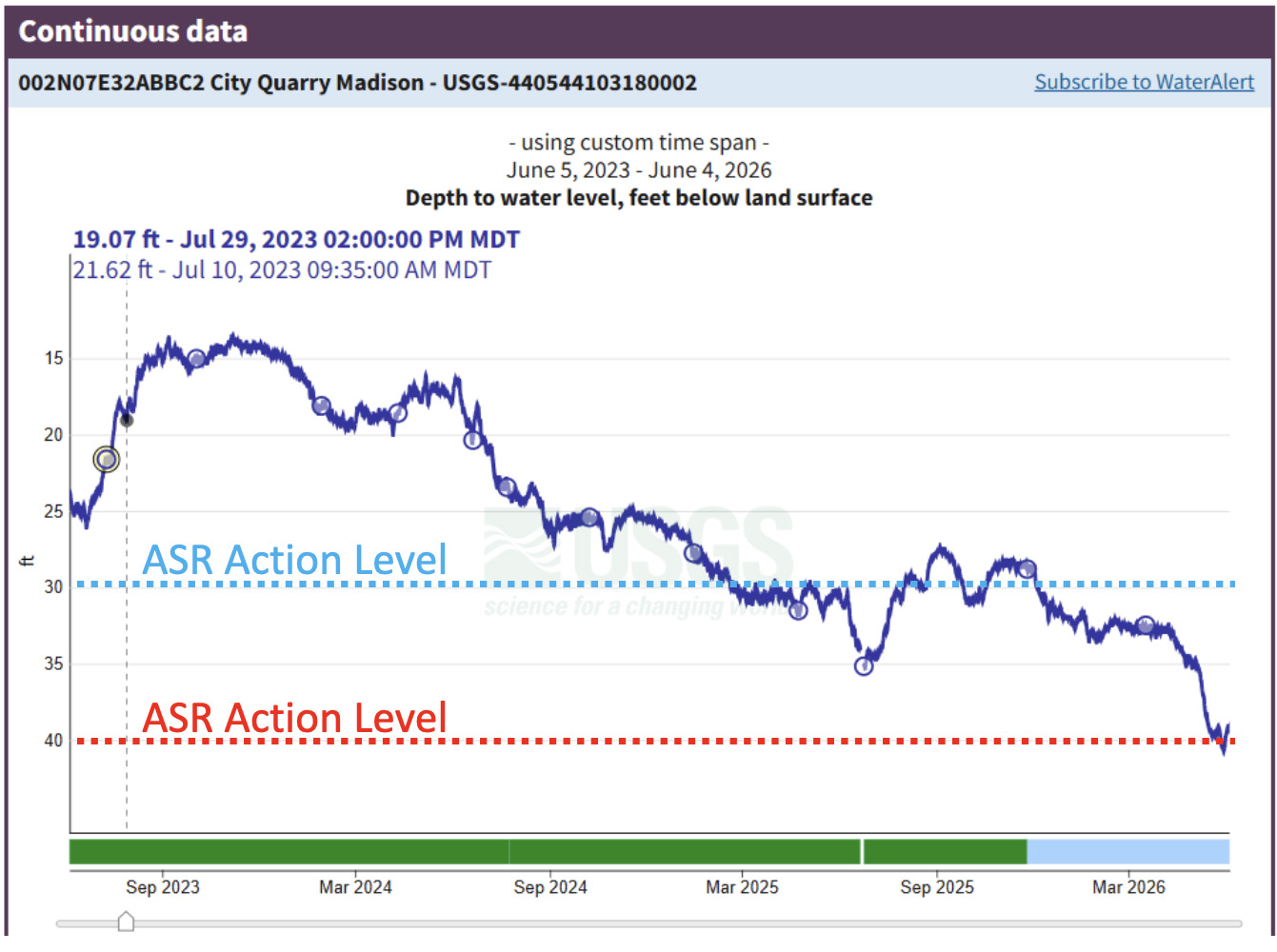
The engineering team also developed a conceptual transmission system that would deliver average day water demands. The concept would be combined with an Aquifer Storage and Recovery (ASR) system to be viable, however. ASR systems work by pumping water into aquifers during periods of low precipitation and snowmelt to maintain water storage levels within aquifers.
An ASR system would supplement natural aquifer recharge with fully treated water from the Missouri River and store it in the enormous spaces within local aquifers. The advantages of this concept are reduced capital and operating costs. A team of hydrogeologists is currently evaluating the local aquifers for their hydraulic and chemical compatibility for this type of system.
How ASR Works
- Recharge/Injection Phase: Treated water, often from rivers, lakes, reservoirs, stormwater, or reclaimed sources, is pumped into a suitable aquifer through wells. The aquifer acts like a natural underground reservoir.
- Storage Phase: The water is stored in the porous rock or sediment of the aquifer. It can remain there for months to years with minimal evaporation loss compared to surface reservoirs.
- Recovery Phase: When needed, the stored water is pumped back out through the same or nearby wells. It may require additional treatment before use, depending on water quality changes during storage.
Conceptual Distribution Design
The engineering team is also nearing completion of the conceptual design for the distribution system that will deliver water from the transmission system to each WDRWS Member water system. Current efforts are focused on reviewing the conceptual design with Members to verify points of delivery, delivery rates, and delivery pressures. The engineers only need to meet with a couple more entities before the conceptual distribution system design is finalized.
Water Treatment Concepts and Cost Estimates
Water Treatment System
Additionally, the engineering team continued developing the conceptual water treatment system. There are different treatment regulations for groundwater, aquifers and wells, versus surface water, rivers and lakes. As a majority of WDRWS Members use groundwater, most do not have the capability to treat surface water. That is why a water treatment plant is planned near the proposed intake in Lake Oahe. This water treatment concept would provide all Members with fully treated potable water from WDRWS.
Two treatment concepts are currently being developed with different finished water qualities. Conventional and advanced membrane treatment concepts are being developed to determine the range of capital and operating costs to treat Missouri River water. The conventional system will have lower capital and operating costs; however, it will have higher mineral content than what many of WDRWS Members currently have in their water. The advanced membrane treatment system will produce water that will be similar in quality to that which many of our members currently enjoy but will have much higher capital and operating costs.
Cost Estimates
Finally, the engineering team has continued to develop cost estimates for the overall system conceptual design. In late 2024, the Engineering Team reported to the Board of Directors its recommendation for the conceptual intake design in Lake Oahe. More recently, the engineers provided initial cost estimates for the conceptual transmission system. The current cost estimates developed to date are provided in the table below:
Estimates for the conceptual treatment and distribution systems will be completed in 2026, providing an overall capital cost estimate for this initial concept. The Engineering Team will use that information to develop a conceptual financial model so Members will be able to see what annual debt service payments and operational costs for the system are expected to be. That effort will wrap up by the end of 2026.
| Conceptual System Component | Estimated Capital Cost |
| 1. Intake System | $0.24B to $0.27B |
| 2. Transmission System | $2.00B to $2.50B |
| 3. Treatment System | TBD |
| 4. Distribution System | TBD |
| 5. Estimated Total (2026$) | TBD |