Missouri River Water for Western South Dakota: Federal Legislation Moves Forward
By Kristin Conzet, Executive Director, Western Dakota Regional Water System
The Western Dakota Regional Water System (WDRWS) kicked off a very active year in Washington as we continue advancing the federal legislation necessary to move forward. Our work in Congress is focused on securing authorization for a Bureau of Reclamation feasibility study that will evaluate the development of a municipal, rural, and industrial water supply from the Missouri River for western South Dakota.
Western South Dakota remains the only major region of the state without access to Missouri River water. Communities, agriculture, industry, tourism, Ellsworth Air Force Base, and Tribal Nations all depend primarily on groundwater sources such as the Madison and Minnelusa aquifers. Independent studies conducted by the South Dakota School of Mines and Technology and confirmed by the U.S. Geologic Survey indicate that West River faces a long-term structural water supply deficit if planning for future demand does not begin now.
WDRWS was created to address that challenge through regional cooperation and long-term infrastructure planning. Over the past five years, WDRWS and its partners have invested significant local, state, and federal resources evaluating potential solutions and advancing the technical planning necessary for a Missouri River supply system.
Federal Legislation
Two pieces of federal legislation are currently advancing to authorize the feasibility study needed to evaluate our project.
S.3723 — Western Dakota Regional Water System Feasibility Study Authorization
Introduced in the United States Senate by Senators John Thune and Mike Rounds, this legislation authorizes the Bureau of Reclamation to conduct a feasibility study evaluating the engineering, cost, and federal interest in developing a Missouri River municipal, rural, and industrial water supply project serving western South Dakota.
H.R.7288 — Western Dakota Regional Water System Feasibility Study Authorization
The companion legislation has also been introduced in the United States House of Representatives by Congressman Dusty Johnson. This bill mirrors the Senate legislation and ensures the authorization effort is moving forward in both chambers of Congress.
Completion of a feasibility study is the necessary next step in the federal process. It will determine the technical feasibility of the project, evaluate alternatives, and establish the federal role in developing long term water infrastructure for the region.
The Senate Energy and Natural Resources Subcommittee on Water and Power held a legislative hearing on March 17, 2026 that included S.3723.
David Palumbo, Deputy Commissioner of Operations for the Bureau of Reclamation, provided testimony on behalf of the Department of the Interior regarding the bills under consideration. Mr. Palumbo’s testimony paved the way for S.3723 to move forward for consideration by the full Senate Energy and Natural Resources Committee, an important step for the project.
Senate Engagement
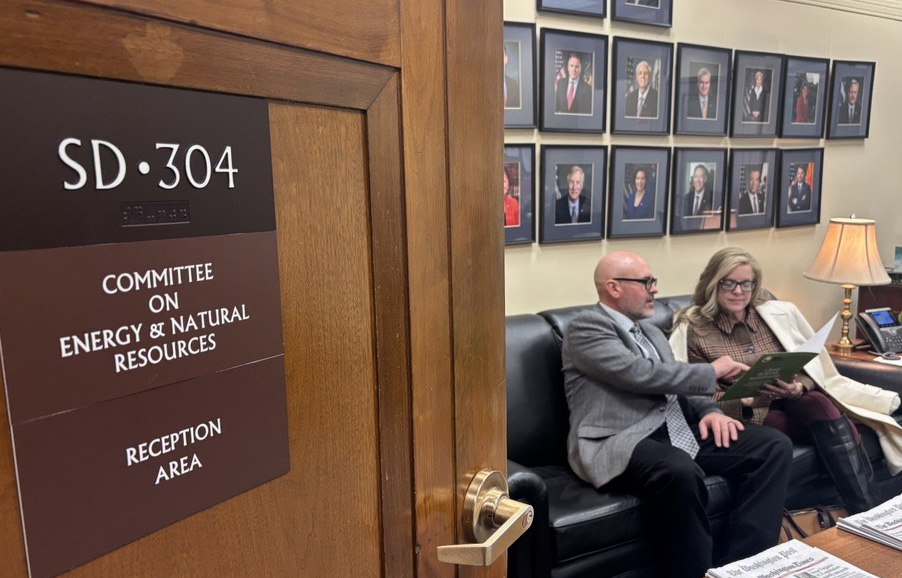
WDRWS continues to work closely with staff from Senators Thune and Rounds to ensure strong support for the legislation and to prepare for the Senate committee hearing process. Recent discussions with committee staff have focused on the requested feasibility study funding, the regional water supply challenges in western South Dakota, and the extensive pre-feasibility work already completed by WDRWS.
House Strategy
At the same time, we are coordinating with Rep. Johnson and his team to move the companion bill forward. H.R.7288 has been referred to the House Committee on Natural Resources. Advancing legislation in both chambers is an important part of maintaining momentum and ensuring the project continues progressing through the federal authorization process.
Next Steps
- Advancing H.R.7288 within the House Natural Resources Committee
- Continuing coordination with our congressional delegation
- Preparing testimony and supporting documentation for the congressional record
- Gathering additional letters of support from regional stakeholders
WDRWS has worked for 5 years to construct a viable regional water supply solution. The progress we are making in Washington reflects years of planning, partnership, and investment from communities across western South Dakota.
WDRWS represents a long-term solution that will strengthen national defense at Ellsworth Air Force Base, support Tribal partnerships, protect agriculture, and ensure communities across western South Dakota have
reliable water infrastructure for generations to come.
What the 2026 Session Means for Western South Dakota
The 2026 South Dakota Legislative Session included proposals and appropriations focused on water infrastructure, water quality, and long-term water supply reliability. From my perspective as the WDRWS Executive Director, this year has been particularly active as we continue working to protect, grow, and support water infrastructure for all of western South Dakota.
Over the past year, WDRWS has remained focused on strengthening long term water security for the region. Our work includes advancing engineering and planning efforts, working with state and federal partners, and continuing to build support for long term solutions that will ensure reliable water supplies for communities, agriculture, and major economic drivers across western South Dakota.
The legislative session also included debate over policies that could significantly impact future water access. WDRWS was actively engaged throughout the session to help ensure that the water interests of western South Dakota were represented and protected. House Bill 1103 proposed restrictions that would tie groundwater withdrawals directly to aquifer recharge rates. This approach would have significantly restricted water availability in western South Dakota and had the potential to stifle economic development in communities that depend on groundwater resources. The proposal did not pass during the session.
Senate Bill 231 marks a major step forward for South Dakota’s long term water planning. Senator Helene Duhamel worked tirelessly to advance this legislation and begin what many of us see as a true “water savings account” for the state. By creating the Water Infrastructure Development Fund, the bill establishes a tool that will grow over time and help support critical rural water infrastructure. Sen. Duhamel has been a strong champion for protecting South Dakota’s water future.
Against this backdrop, several pieces of water related legislation were considered during the 2026 session, addressing infrastructure funding, water quality initiatives, and long-term resource management.
Other Water Related Bills
- SB 222 Provides funding for water quality improvements and watershed projects, including incentives for landowners to implement conservation practices and funding for local drinking water and wastewater infrastructure improvements.
Status: Passed by the Senate
and scheduled for hearing in
the House. - SB 37 Appropriations legislation that provides funding for water and environmental programs administered through the Department of Agriculture and Natural Resources and projects listed on the State Water Plan.
Status: Passed the House and
the Senate. - SB 7 Legislation related to funding and policy adjustments for state environmental and natural resource programs that may include water related initiatives.
Status: Defeated - SB 607 Legislation related to infrastructure and environmental program financing that may include water infrastructure funding depending on appropriations.
Status: Passed the House and
the Senate